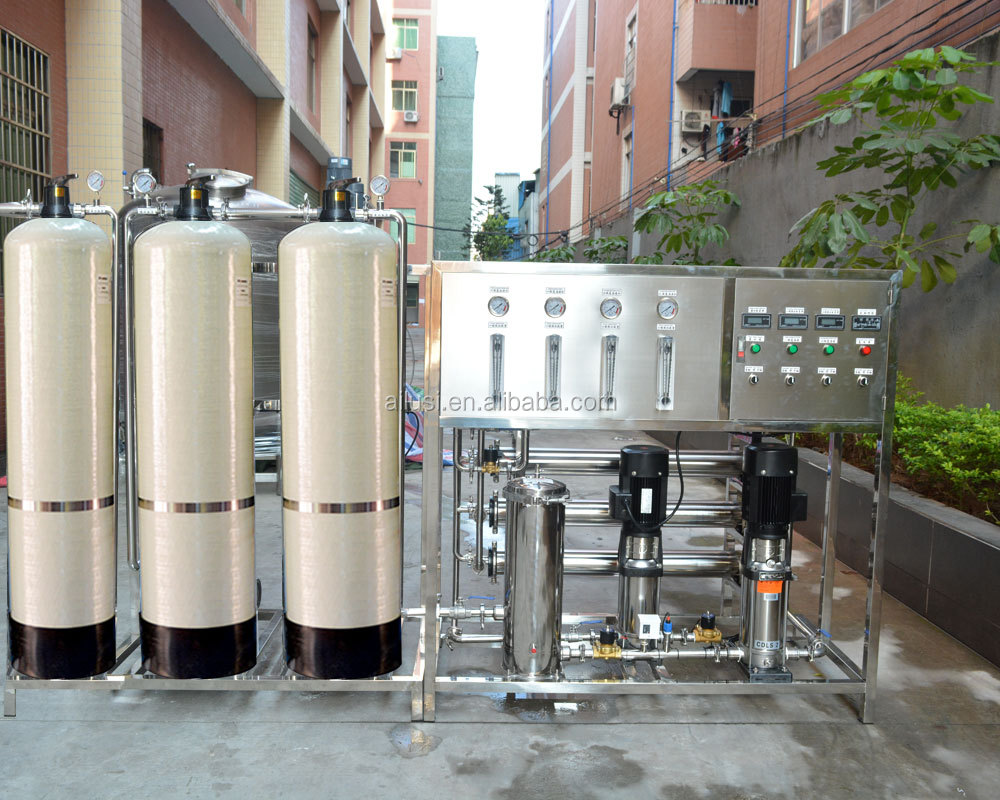
RO plants are rated in LPH, litres per hour of treated water (permeate). To choose one you need three numbers: how much water you need, the quality of the feed water and the recovery the plant can safely achieve.
Step 1: daily demand to LPH
Divide the daily requirement by the hours the plant can run. If you need 8,000 litres a day and the plant runs 16 hours, you need 500 LPH. Running longer hours with storage is usually better than a larger plant that starts and stops.
Step 2: feed water analysis
TDS, hardness, iron, silica, turbidity and chlorine all affect design. Higher TDS needs more pressure and limits recovery. Hardness and silica cause scaling. Iron and chlorine damage membranes. A full analysis is the basis of a membrane projection.
Step 3: recovery
Recovery is the share of feed water that becomes permeate. If recovery is 60%, a 500 LPH plant needs about 830 LPH of feed and produces about 330 LPH of reject. Pushing recovery too high causes scaling; too low wastes water.
| Feed TDS | Typical recovery | Notes |
|---|---|---|
| Up to 1,500 ppm | 60% to 75% | Single stage is often enough |
| 1,500 to 3,000 ppm | 50% to 65% | Antiscalant and good pre-treatment essential |
| Above 3,000 ppm | Designed on projection | Often two stages, higher pressure pumps |
Step 4: pre-treatment
- Sand or multigrade filter for turbidity.
- Activated carbon or SMBS dosing to remove chlorine.
- Iron removal where iron is present.
- Softener or antiscalant for hardness.
- 5-micron cartridge filter before the high pressure pump.
Step 5: plan for maintenance
Include a CIP system for membrane cleaning, pressure gauges across each stage and a conductivity meter on the permeate. These make it easy to see when cleaning is due.
See our industrial RO plants or send your water analysis for a sizing proposal.