Zero liquid discharge (ZLD)
Zero liquid discharge, planned stage by stage.
When your consent does not allow any effluent discharge, every litre must be recovered or evaporated. We plan ZLD so the expensive evaporation stage handles as little water as possible.
- Stages
- ETP, UF, RO, evaporation
- Output
- Reusable water and dry solids
- Focus
- Lowest thermal load
Overview
Recover water first, evaporate the rest.
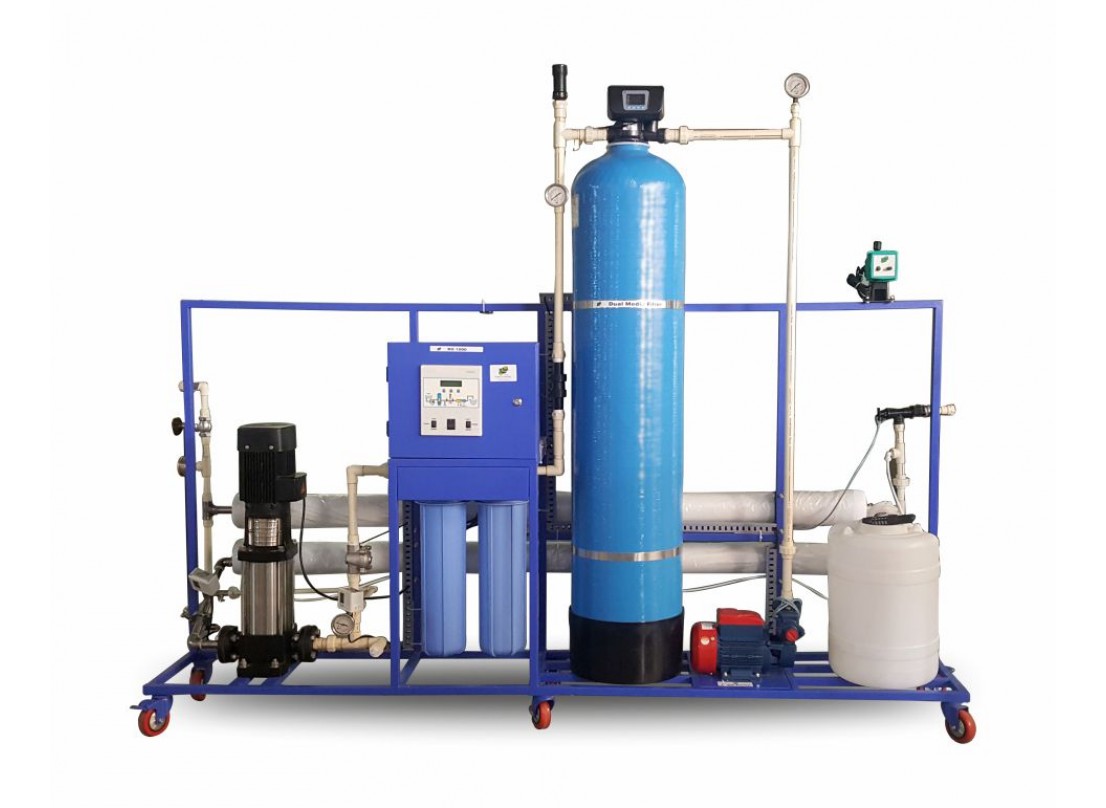
A zero liquid discharge system combines effluent treatment, membrane recovery and thermal evaporation. The ETP removes solids and organics, ultrafiltration and RO recover most of the water for reuse, and the concentrated reject is evaporated, leaving salts and sludge as solid waste.
Evaporation is by far the most expensive step, so good ZLD design is about pushing recovery up before it. We work on segregation, pre-treatment and multi-stage RO to reduce the reject, and size the evaporator stage with specialist equipment partners where it is needed.
You probably need this if
- Your consent requires zero discharge
- Water scarcity makes reuse essential
- High-TDS effluent from chemical, pharma or textile processes
- Existing ZLD with high evaporator cost
How it works
The treatment step by step.
- 1
Segregation
High-TDS and low-TDS streams kept apart where possible.
- 2
ETP
Physico-chemical and biological treatment of the combined effluent.
- 3
Ultrafiltration
Protects the RO from fouling.
- 4
Multi-stage RO
High-recovery RO returns most of the water to utilities or process.
- 5
Evaporation
MEE or other evaporator concentrates the RO reject.
- 6
Solids handling
Salt and sludge dried and stored for authorised disposal.
Technology options
Key building blocks.
High-recovery RO
Two or three RO stages with antiscalant control.
Evaporation
Multiple effect evaporator or similar, sized on the final reject.
Water balance
Plant-wide balance to find savings before equipment is chosen.
What you get
Built to run day after day.
Water back to process
Most of the effluent returns as usable water.
Lower energy
Smaller evaporator through higher membrane recovery.
Compliance
Meets zero-discharge consent conditions when operated as designed.
From enquiry to handover
One team, start to finish.
We design, fabricate, install and maintain the plant, so there is one point of contact for performance.
- 01
Site survey
We visit, test the water or wastewater, measure the space and note power, access and discharge points.
- 02
Process design
Flow and load calculations, treatment train, layout drawing and a clear scope of supply.
- 03
Fabrication
Tanks, skids, panels and piping built and checked in our Pune workshop before dispatch.
- 04
Install and commission
Erection, wiring, seeding or start-up, trial runs and operator training at your site.
- 05
Operate and maintain
Optional operation, AMC visits, spares and performance reports so the plant keeps working.
Faster, more accurate quotes
What to share with your enquiry.
A few details let us size the plant properly the first time. If you do not have them yet, we can measure or test on site.
- Effluent volume and analysis including TDS
- Consent conditions
- Existing ETP and RO details
- Steam or power availability
Questions we hear
Questions about zero liquid discharges.
What is zero liquid discharge?
A treatment approach where no liquid effluent leaves the plant. Water is recovered and reused, and the remaining salts are evaporated to solids.
Is ZLD expensive to run?
It is more expensive than conventional treatment, mainly because of evaporation. Good pre-treatment and high RO recovery keep the evaporator small.
Can an existing ETP be converted to ZLD?
Usually yes, by adding UF, RO and evaporation after it, with some upgrades to the ETP.
Do you supply evaporators?
We engineer the full ZLD train and supply treatment and membrane stages. The thermal stage is sized and sourced with specialist partners when required.
Related systems
Often specified together.
Talk to an engineer
Planning a zero liquid discharge?
Share your flow, water quality and site details. An engineer will reply with the next step, usually a site visit or a sizing call.